
Articulation Therapy in Frisco and McKinney TX
Clear, confident speech starts with the right support. Our speech-language pathologists help improve speech sound clarity through personalized, one-on-one therapy.

What Articulation Therapy Actually Treats
Articulation refers to the physical process of forming speech sounds using the tongue, lips, jaw, and breath. When articulation is affected, certain sounds may come out distorted, substituted, or omitted, making speech harder to understand.
Common examples include saying “wabbit” instead of “rabbit,” “thun” instead of “sun,” or leaving off the ends of words. Lisps, where “s” or “z” sounds are produced differently, are also a common form of articulation differences.
These patterns are not related to intelligence or effort. They simply indicate that the speech sound system needs targeted support to develop more accurate and consistent production.
Articulation therapy focuses on improving those specific sounds through structured, guided practice that builds clarity and confidence over time.
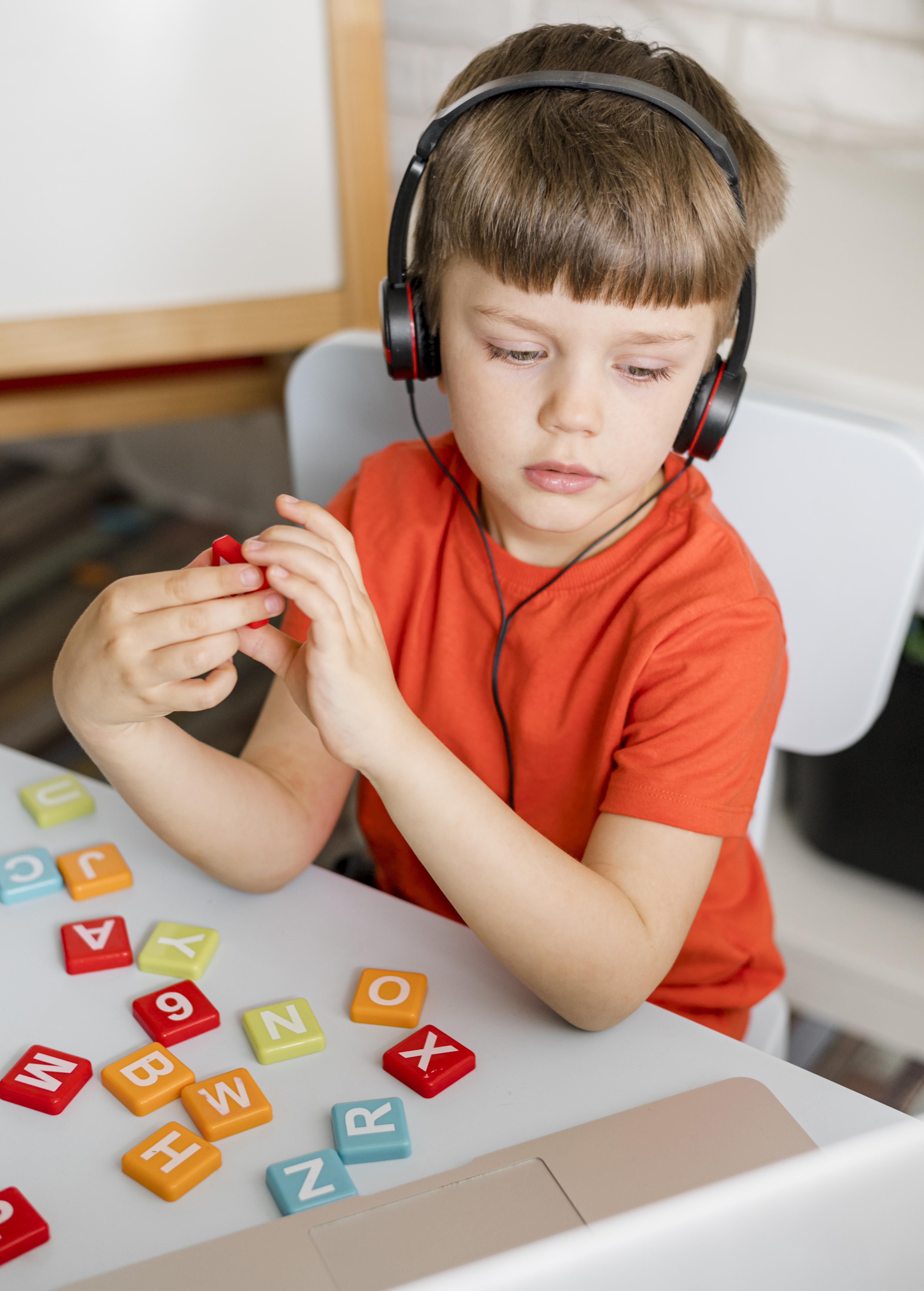
.jpg)

Signs Articulation Therapy May Help
You may notice that speech is harder to understand compared to peers, or that unfamiliar listeners have difficulty following what is being said. This gap between intended and understood speech can lead to frustration or avoidance.
Signs that articulation therapy may help include:
- Substituting one sound for another consistently (e.g., "w" for "r," "t" for "k")
- Omitting sounds from the beginning or end of words
- Distorting sounds, especially "s," "z," "sh," "ch," or "r"
- A lisp that persists past age 4 or 5
- Difficulty being understood by teachers, peers, or unfamiliar adults
- Frustration or avoidance when speaking in group settings
How Summit Therapy Treats Articulation Challenges
Treatment begins with a comprehensive evaluation to identify which sounds need support and how consistently those patterns appear. From there, a personalized plan is created using a structured, evidence-based progression.
Sessions are designed to be engaging and effective. For younger clients, this may include play-based activities that build sound production naturally. For older individuals, therapy is often more direct and goal-focused.
You’ll work with the same speech-language pathologist throughout the process, allowing for consistency, stronger communication, and more efficient progress.
Guidance for practice outside of sessions is also provided, helping reinforce skills between appointments.
Begin Your Therapy Journey
Reach out today via phone, text or email
Talk to a real person in the office locally.
Complete intake forms
We will verify insurance before your first visit.
Schedule your first visit
We will call you to schedule your first visit within one day of receiving your new patient paperwork.
Begin your therapy journey
Be amazed with your progress!
FAQs
Most children have mastered all English speech sounds by age 7 or 8. Certain sounds like 'r,' 'l,' and 'th' develop later than others. If your child is significantly harder to understand than peers their age, or if their speech is causing frustration, an evaluation is a smart next step regardless of age.
The length of therapy varies depending on how many sounds are targeted and how consistently your child attends sessions. Many children make meaningful progress in 6 to 12 months of weekly therapy. Your child's SLP will givae you a realistic estimate after the initial evaluation.
Yes. Lisps are one of the most common reasons families seek articulation therapy. Whether your child has a frontal lisp or a lateral lisp, targeted therapy can help them learn to produce 's' and 'z' sounds accurately and naturally. Most children respond well with consistent practice.
In most cases, you do not need a physician's referral to begin speech therapy in Texas. You can call Summit Therapy directly or request an appointment online to get the process started. We'll help you sort out any insurance requirements before your first visit.

Medical Reviewer
Amanda Ahmed, MA, EdM, CCC-SLP
Amanda is a Speech-Language Pathologist who applies evidence-based practices to improve functional communication across settings. She has experience in acute and sub-acute care, neonatal intensive care (including feeding and swallowing), rehabilitation facilities, and school settings.
She is a member of the American Speech-Language-Hearing Association (ASHA) and the Texas Speech and Hearing Association, and a 2019 graduate of the ASHA Leadership Development Program (LDP) Healthcare Cohort, a highly selective program. Amanda earned her Master’s in Communication Disorders and Sciences from SUNY Buffalo in 2003.
Our Other Programs

Voice Therapy
A healthy, reliable voice is essential for daily life and work. Our speech-language pathologists provide personalized voice therapy for hoarseness, vocal fatigue, and more.

Social Skills
Social communication is a learned skill, and the right support helps children and teens connect more confidently. Our speech-language pathologists provide personalized social skills therapy.

Speech Delay
When a child is slow to start talking, the right support can make a meaningful difference. Our speech-language pathologists provide personalized therapy for speech delays.
Ready to Get Started?
Contact us today to schedule your first appointment and begin your journey toward better communication.